
What materials do I need to dye fabrics or yarn naturally at home?
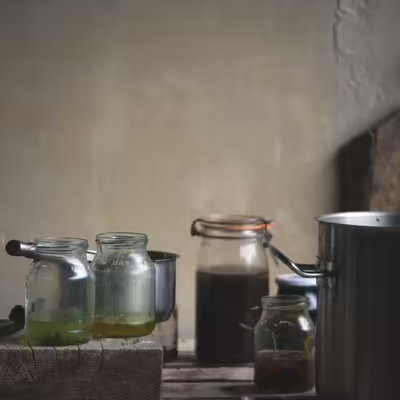
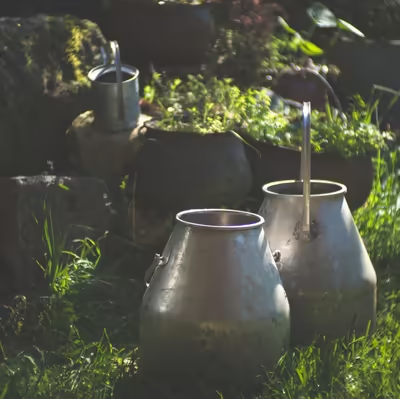
The adventure of natural dyeing requires no special equipment when creating colors for yourself. If you are equipped for cooking, then you are already prepared for natural dyeing.
It is generally recommended that equipment be used exclusively for dyeing, especially when using alum, iron, or lime for the indigo vat.
However, if you are only handling non-toxic plants that also possess medicinal properties, this precaution is less critical.
Choose a well-ventilated area to work in.
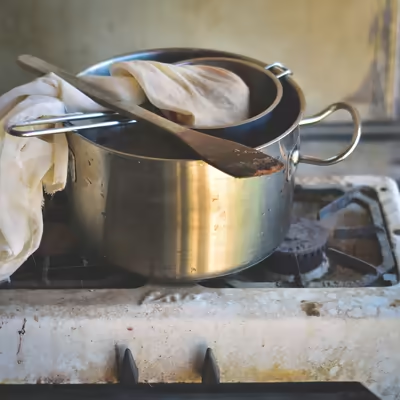
It is always useful to have baking soda or soda crystals, a little chalk, and lemon juice on hand, depending on the recipe, as some plants are very sensitive to pH.
Adjusting the bath to be more alkaline or acidic allows you to play with color shades.
Similarly, some plants, such as madder, perform best in slightly hard water. Since my water is quite soft, I always add a few pinches of chalk to my madder bath.
Pots for Natural Dyeing
Pot Materials
The materials chosen must be inert; in other words, they should not interfere with the composition of the dye bath.
Stainless steel is the best choice. It is the most versatile and durable material. Stainless steel is essential for preparing plant decoctions to extract mordants or colors.
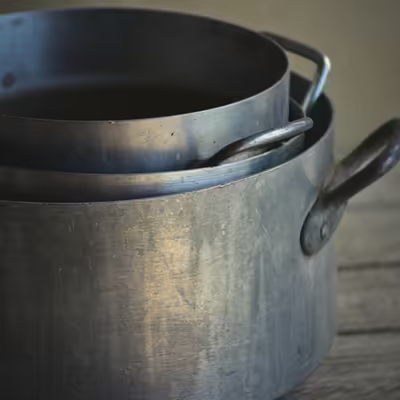
The main disadvantage of stainless steel is its cost. However, I encourage you to visit recycling centers, where you may find stainless steel pots at more affordable prices.
If you are shopping for secondhand dyeing equipment, you will often find large aluminum pots. Stored in the kitchen, these pots can be very useful when you need to dye large quantities. Of course, they are not inert: a few milligrams of aluminum may migrate into your dye bath. These infinitesimal doses in a 20-liter dye bath can enhance the color without posing a risk of contamination.
Iron or copper pots interact directly with the color, causing it to darken or turn green. If you use these pots, be sure to stir constantly to prevent staining.
Pots sizes
It is advisable to select various sizes: smaller pots, such as saucepans, for plant decoctions, and larger stockpots for dye baths.
The volume of the dye bath depends on the weight of the fibers you are dyeing. In general, you will need 5 gallons of water to dye 2 pounds of fiber (approximately 20 liters per 1 kg).
The capacity of your pot, such as a stockpot, should therefore be appropriate for the amount of fibers you wish to dye.
If you are dyeing skeins of yarn, choose pots that are taller than they are wide. Conversely, for dyeing fabrics, select pots that are wider than they are tall so the fabric can be spread out fully across the pot’s width.
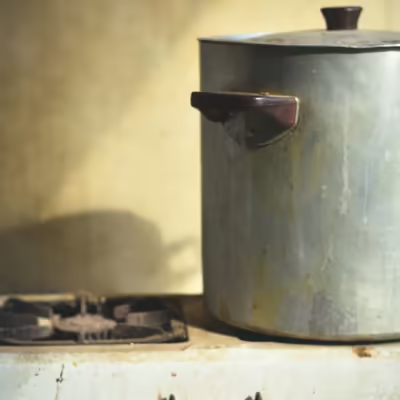
Ideally, you should have pots of various sizes and volumes on hand to suit your specific projects.
Other equipment and utensils for natural dyeing
In addition to pots and pans, you will need equipment that is typically found in your kitchen:
- Gas or Electric Stove
- Scale
- Thermometer
- Wooden Spoons
- Tablespoons and Teaspoons
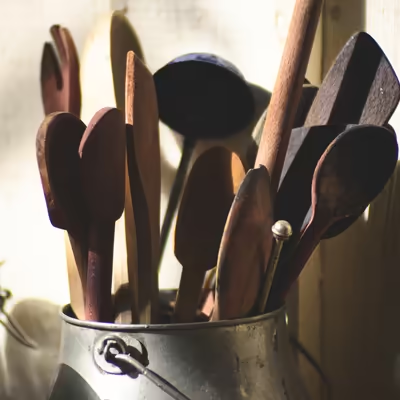
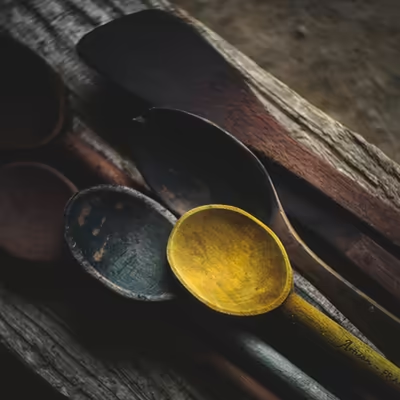
- Strainers
- Cheesecloth for filtering
- Glass or stainless steel bowls for holding the dye juices
- Plastic Bowls and Buckets
- Gloves and apron
You can find everything you need at low cost in recycling centers or at garage sales.
Controlling the pH of Natural Dye Baths
Finally, it is important to check the pH of your preparations and adjust the level if necessary. For this reason, it is useful to have pH paper on hand as a measuring tool, which you can find at the pharmacy. Even better, though more expensive, option is a pH meter. To adjust the pH level, lemon juice and baking soda or soda crystals are always useful.
With all these tools and materials, you are equipped to make natural dyes in yellow, pink, purple, or green.
Other articles on botanical dyes…
… where I share my experiences and thoughts