
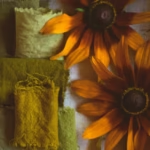
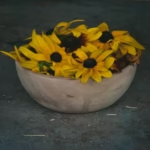
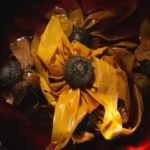
Rudbeckia natural dye: pink, yellow & green from one plant
One plant, three natural colors

In this article
Introduction · Pick rudbeckia · How to dye · Color shades · Decoction · Dye bath · FAQ
Also known as black-eyed Susan, rudbeckia is an excellent plant for botanical dyeing. With just one plant, you can yield pink, yellow, and even green.
This range of colors comes from the plant’s varied chemistry, mainly flavonoids (the yellow family). Anthocyanins in the flowers are what bring out the pinks.
Rudbeckia works on both animal and plant fibers, with any natural mordant. It truly shines on animal fibers, especially silk.
1. Pick rudbeckia for natural dyeing
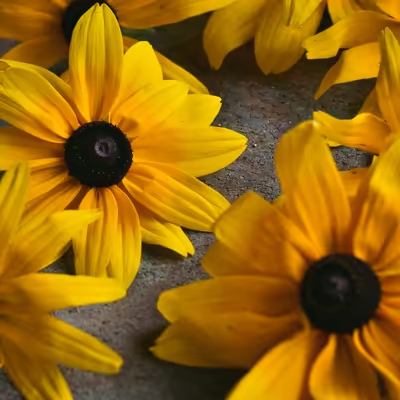
With its stiff stems pointing toward the sun and the vibrant yellow-orange of its petals surrounding a domed crimson-brown heart, it carries itself with quiet confidence.
A member of the Asteraceae family and native to the United States and Mexico, rudbeckia is an undemanding perennial that thrives in even the poorest soils. It tolerates drought well and flourishes when it receives ample sunlight. Given half a chance, it spreads readily.
You can pick it all summer long. Harvest the whole plant.
Then separate the flowers from the stems and leaves to make two different dyes: yellows and greens with the finely chopped stems and leaves, and purplish-pink from the whole flowers.
Rudbeckia is a fresh dye plant, not one you dry for later. For vibrant colors, use a generous amount of fresh plant: 600–800% WOF (weight of fiber). That’s easier than it sounds as the flowers are surprisingly heavy.
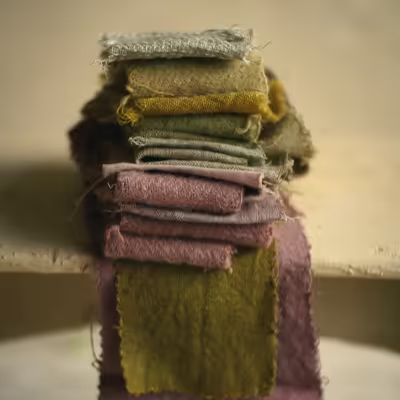
Want to learn more about natural dyeing?
2. How to dye with rudbeckia
Mordanting is necessary before dyeing with rudbeckia. I use the usual natural processes: symplocos (French shop) or more experimental processes such as beetroot leaves or birch bark. Follow the mordanting method described for madder dyeing.
After mordanting, dyeing with rudbeckia happens in two stages.
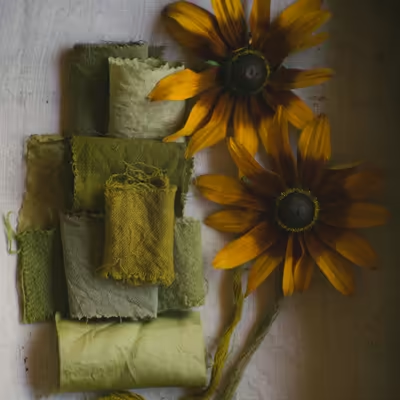
2.1. Rudbeckia natural dye shades
| Color obtained | Plant part | Bath pH | Quantity (WOF) | Fibers |
|---|---|---|---|---|
| Pink / purplish | Whole flowers | pH 4 (lemon juice) | 600–800 % | All fibers |
| Yellow | Stems & leaves (finely chopped) | pH 7–8 (baking soda if needed) | 600–800 % | All fibers |
| Greenish green | Stems & leaves (finely chopped) | pH 7–8 | 600–800 % | All fibers |
| WOF = weight of fiber · Mordanting required before dyeing · Rudbeckia used fresh (not dried) · Silk gives the most vibrant colors | ||||
2.2. Decoction to extract rudbeckia dye
- Set up two pots: one for the flowers and the other for the stems and leaves. Fill them with water and let them steep for a few hours.
- Adjust the pH of each decoction: for the flowers, add lemon juice for a pH of 4. For the stems and leaves, the pH should be 7 or 8. Add baking soda if necessary.
- Heat gradually to just below a simmer, 175°F (80°C). Maintain this temperature for 1 hour, or slightly longer for larger batches of plant material. The flower liquor turns red. The stem-and-leaf liquor shifts to greenish yellow.
- Turn off the heat. Allow to cool and strain the decoctions through cheesecloth.
- Let both liquors rest overnight.
For silk
You can dye in a cold or lukewarm bath: soak the fibers for 12 hours, stirring regularly.
2.3. The rudbeckia dye bath
- Pour the plant liquids into two stockpots that are large enough for the fibers to move freely.
- Add water to obtain a ratio of approximately 1:20, meaning 1 liter of decoction for about 19 liters of water.
- Check the pH of each bath: pH 4 for flowers, and pH 7 or 8 for stems and leaves. If needed, add lemon juice or baking soda to adjust the pH.
- Add your mordanted fibers (pre-wet and wrung out) into the dye bath. Make sure they are fully immersed in the bath.
- Heat slowly to just below a simmer (175°F/80°C). Do not boil. Maintain this temperature for at least 1 hour.
- Stir gently and regularly, approximately every 10 minutes.
- Turn off the heat and allow the dye baths to cool down.
- Once the baths have cooled, remove the fibers and wring them out to dry. Dry in the shade.
- Then wash with the usual care.
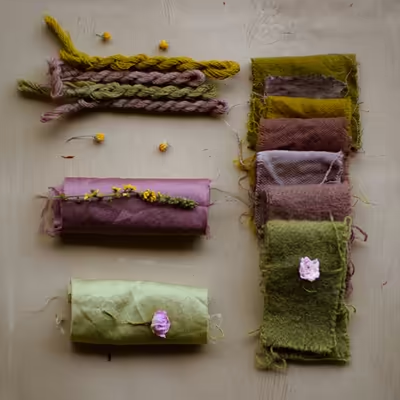
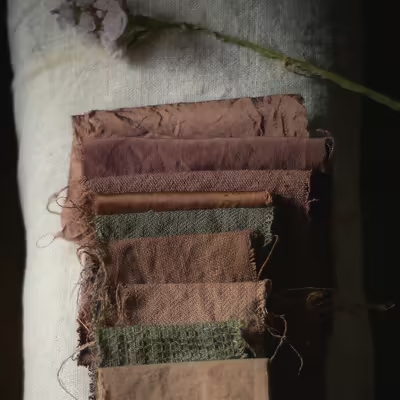
With rudbeckia you can reach yellow (like turmeric), pink (like avocado or madder), and green, from a single plant.
Your questions about rudbeckia natural dyeing
Do you need to mordant before rudbeckia dyeing?
Yes. Mordanting is necessary before any rudbeckia dyeing. I use the usual natural processes: symplocos (French shop) or more experimental methods such as beetroot leaves or birch bark.
Which part of the plant gives pink, and which gives yellow?
The whole flowers give purplish-pink tones (bath at pH 4). Finely chopped stems and leaves give yellows and muted greens (bath at pH 7–8). Harvest the whole plant, then separate the two parts to prepare two distinct decoctions.
How much rudbeckia do you need?
For vibrant colors, use 600–800% of the weight of the fiber (WOF): if your fabric weighs 100 g, plan on 600 to 800 g of fresh plant for the part you are using (flowers or stems/leaves). Rudbeckia is generous, but hungry for plant matter.
Which fibers work best?
Rudbeckia works on all animal and plant fibers, as long as they are mordanted. It gives its best results on animal fibers, especially silk. For silk, the bath can even be done in cold or lukewarm water, with a long soak (about 12 hours).
Does the color hold when washed?
With proper mordanting and careful rinsing, rudbeckia dye behaves like most flavonoid dyes: it needs the usual washing precautions (lukewarm water, mild soap, drying in the shade). To learn more about the fastness of natural colors, see my article Do botanical colors last?