
How to Dye Fabric with Turmeric: A Complete Guide to Turmeric Dyeing
One spice, three colors

In this article
Introduction · What is turmeric dye · What affects color · Supplies · Methods · Step-by-step · Color shifts · Iron acetate · Does it fade? · FAQ
Turmeric opens the door to botanical color with almost no barrier to entry: a spoonful of powder from your spice aisle, a pot of water, and a natural fiber ready to soak. Dyeing with turmeric gives warm yellows on cotton, linen, hemp, wool, and silk and no mordant is required.
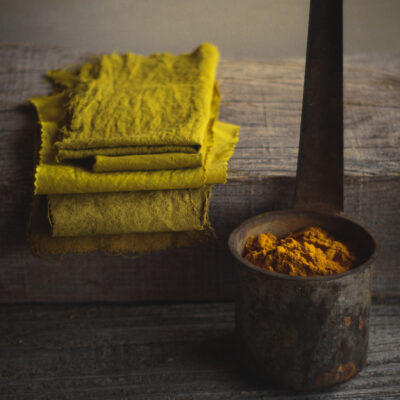
Like avocado dye for pinks and onion dye for oranges, turmeric is one of the rare dyes that grips the fiber on its own. And like rudbeckia, a single plant can yield yellow, greenish gold, and rose, depending on modifiers and water.
My method is one path among many. The goal here is to give you clear steps and honest expectations. After that, you adjust proportions, bath times, fiber quality and discover how wide the field of natural color can be. That openness is part of what makes turmeric dyeing exciting.
Below: a step-by-step guide on how to dye fabric with turmeric, two bath methods, and straight answers, including whether you can make turmeric dye permanent.
Can You Dye Fabric with Turmeric at Home?
Yes! Dyeing with turmeric at home is straightforward, safe, and genuinely satisfying, in the same spirit as avocado dye or onion dye.
Simmer powdered turmeric in water, strain the bath, add your fabric: a bright, warm yellow appears almost before your eyes.
Turmeric dye works on any natural fiber without a mordant.
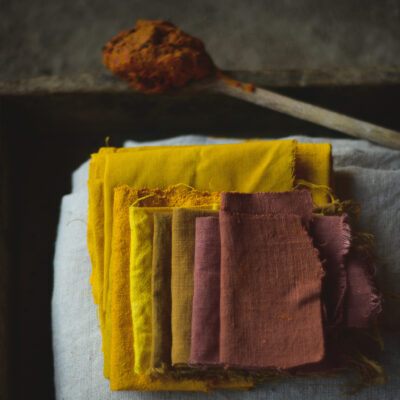
The trade-off is lightfastness. Turmeric is a fugitive dye. The color softens with sun and washing. For cushion covers, curtains, wall hangings, craft cloth, and clothes worn mostly indoors, dyeing fabric with turmeric remains one of the most generous entry points into natural color. When the yellow fades, you can always dip the pot again.
What Is Turmeric Dye?
Turmeric dye is a plant yellow drawn from the rhizomes of Curcuma longa. Its active pigment, curcumin, is the same compound that stains your cutting board and brightens curry. Here, it becomes textile color: pale lemon, deep golden ochre, and with simple shifts, pink or khaki.
Powdered turmeric gives the most consistent results; fresh grated root works too (plan on roughly twice the weight). People have dyed with turmeric across Asia and Europe for centuries, valued for its immediacy, low cost, and vivid first bath, even though the color was never meant to last forever.
Want to learn more about natural dyeing?
Dyeing Fabric with Turmeric: What Affects Your Color
When dyeing fabric with turmeric, a few variables steer the final shade. Once you know them, you can repeat a bath with intention instead of surprise.
- Turmeric amount (WOF, weight of fiber): 100% WOF for deep yellow, 50% for a lighter wash
- Powder quality: fresher, brighter turmeric (higher curcumin) gives a richer yellow
- Water: soft water yields cleaner yellows while hard water can push toward greenish gold
- Heat: at least 45 minutes to extract the dye, then 45 minutes in the bath with fabric
- Fiber: silk drinks color quickly; cotton and linen ask for patience; wool grabs yellow fast
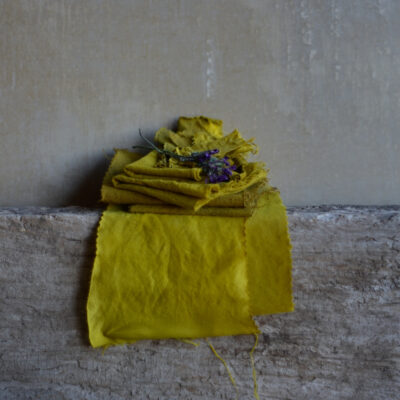
Supplies for Dyeing with Turmeric
- Stainless steel or enamel dye pot (not used for food)
- Strainer and cheesecloth
- Iron sponge or steel wool (for iron acetate)
- Glass jar and white vinegar (14° preferred)
- Lemon juice and baking soda
- Turmeric powder
- Natural fiber fabric: cotton, linen, hemp, silk, wool
See my full guide on equipment for natural dyeing for details on choosing the right dye pot. And remember that WOF means weight of fiber: your fabric weight is the baseline for every measurement in this recipe.
2 Methods for Dyeing with Turmeric
Method 1: Hot turmeric dye bath (recommended)
Simmer turmeric powder, strain, then add fabric to the hot bath. Best for even color when dyeing fabric with turmeric or clothes. Follow the step-by-step guide below.
Method 2: Cold water turmeric dyeing
Skip simmering: stir turmeric powder into a bucket of water and add your fabric. Soak several hours or overnight. Handy for tie-dye and shibori, but powder granules may lodge in loose weaves. Expect a lighter, slightly uneven yellow than the hot method.
How to Dye Fabric with Turmeric: Step-by-Step
This hot bath is the method I trust most when learning how to dye fabric with turmeric, especially if you want even color on the first try.
- Weigh your fabric: Weigh your dry, unprimed fabric. This is your WOF reference for calculating turmeric. If you’re dyeing a garment, remove buttons or anything that shouldn’t go in the pot.
- Weigh the turmeric: Use 100% WOF for deep yellow, or 50% for a lighter shade. For 100 g of fabric, that’s 100 g of turmeric powder. Turmeric is generous with color but asks for weight. Don’t skimp if you want a saturated yellow.
- Soak the fabric: Soak in lukewarm water at least 30 minutes until fully wet. Wring gently before the bath. Wet fiber takes color more evenly than dry.
- Simmer the turmeric dye: Add turmeric to the pot with enough water to cover. Simmer gently at least 45 minutes, stirring regularly. Watch for splashes: turmeric stains instantly.
- Strain and add lemon juice: Strain through cheesecloth to remove granules. Add a splash of lemon juice to the liquor. The slight acidity helps stabilize the yellow.
- Add fabric and simmer: Return the liquor to a clean pot. Add wrung-out fabric so it moves freely. Bring to a boil, then simmer at least 45 minutes. Stir with tongs for even color.
- Cool and dry in shade: Turn off the heat and let the fabric cool in the bath. Wring gently and hang to dry in the shade. Never in direct sun after turmeric dyeing.
- Rinse when dry: Once completely dry, rinse in cool water until clear. Use pH-neutral soap if needed. Wear gloves throughout.
Getting Pink, Khaki and Greenish Yellow from Turmeric Dye
Turmeric dyeing defaults to deep yellow. After the main bath, you can nudge the color with household modifiers:
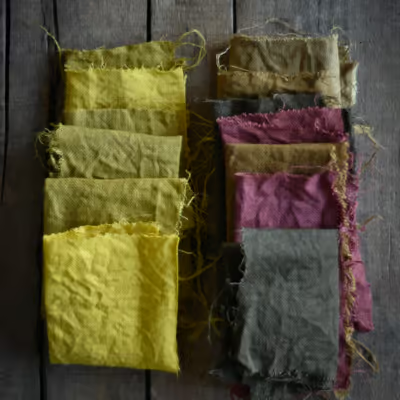
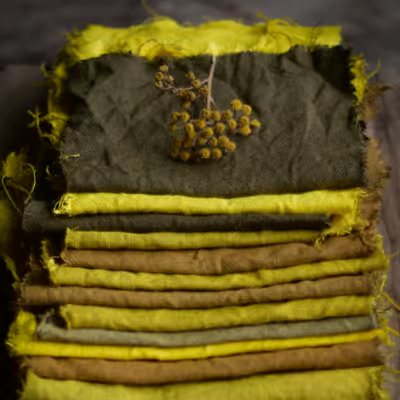
- For rose or brick red: soak turmeric-dyed fabric 5 minutes in half a liter of warm water with one tablespoon of baking soda. Wring out immediately.
- For beige or khaki: soak turmeric-dyed plant fibers (cotton, linen, hemp only; not wool or silk) in an iron acetate solution. Shade depends on soaking time and how strong your iron acetate is.
Color results at a glance
| Color obtained | Quantity (WOF) | Modifier | Fibers |
|---|---|---|---|
| Deep yellow | 100% | — | All fibers |
| Light yellow | 50% | — | All fibers |
| Orange / pink / red | 100% | Baking soda | All fibers |
| Beige / khaki | 100% | Iron acetate | Cotton Linen Hemp |
| Greenish yellow | 100% | Hard water | All fibers |
| WOF = Weight of Fiber · Iron acetate: do not use on wool or silk · Turmeric is not lightfast — reserve for indoor use | |||
DIY Iron Acetate to Modify Turmeric Dye
Place half a liter of white vinegar (14°) in a jar with a metal scouring sponge or steel wool. Close and wait about a week until the liquid turns orange. That’s iron acetate: use it in small amounts to shift turmeric dye toward beige or khaki on plant fibers.
Iron-modified turmeric dyeing holds up slightly better in sunlight than pure yellow. Still, reserve turmeric for indoor textiles whenever you can.
Iron Acetate
Use iron acetate on plant-based fibers only — cotton, linen, hemp. Do not use it on wool or silk. It can damage animal fibers.
How Long Does Turmeric Dye Last? Can You Make It Permanent?
After a first turmeric dyeing project, the question is always the same: will it hold? Turmeric is not a lightfast color. It fades and you cannot make it fully permanent. You can slow fading, and you can choose projects where that matters less.
Does turmeric dye fade?
Yes. Sun and washing soften the color faster than most natural dyes. UV light is the main culprit: a turmeric-dyed garment worn outdoors can lose noticeable brightness in a single day. Indoors, away from direct light, the color typically holds 6 to 8 months before softening.
Iron-modified shades (beige, khaki) tend to fade more slowly than pure yellow. Many natural dyers treat the softening as patina rather than failure; especially on textiles that live indoors. Turmeric dyeing suits cushion covers, curtains, wall hangings, craft projects, and clothes worn primarily inside.
How to make turmeric dye permanent
Honestly: you cannot make turmeric dye fully permanent. Curcumin coats the fiber surface rather than bonding deep inside it, the way mordant dyes like weld, madder, or indigo do. No mordant, fixative, or after-wash treatment will match that durability.
- Dry and store away from direct sunlight
- Hand wash in cold water with pH-neutral detergent only
- Avoid alkaline soaps, bleach and stain removers
- Keep away from acidic liquids once the color is set
- Re-dye when the color softens — turmeric dyeing makes this easy and inexpensive
- Use iron acetate modifier: khaki tones fade more slowly than pure yellow
If you need a truly permanent yellow, see yellow dye plants: weld (Reseda luteola) or rudbeckia with natural mordant. Turmeric remains the best choice when you want zero mordant, instant results, and accept that re-dyeing is part of the process.
Turmeric Dye FAQ: Fresh vs. Powder, Wool, Cotton & More
What part of the turmeric is used to dye fabrics and yarns?
The rhizomes (the underground stems) are used for dyeing. Rich in curcuminoids, they release the yellow pigment into the bath when simmered.
Can I use fresh turmeric root instead of powder?
Yes. Fresh root works for dyeing fabric with turmeric; plan on roughly twice the weight of powder, since curcumin concentration is lower in fresh rhizomes. Grate or finely chop the root before simmering, then strain carefully. Bits cling to fabric. Results match powder in spirit but vary with variety and ripeness. For beginners, powder is more convenient and consistently concentrated.
What is the recommended quantity of Turmeric to dye fabrics?
Use 100% WOF (weight of fiber): for 100 g of fabric, 100 g of turmeric powder. For a lighter yellow, 50% WOF is enough. Turmeric is generous with color but asks for weight. Don’t skimp on powder if you want a deep yellow.
What colors does turmeric dye produce?
Turmeric dye runs from sunny yellow through brick red and reddish brown, depending on modifiers. Yellow is the default bath; baking soda shifts toward orange, pink, or red; iron acetate on plant fibers yields beige or khaki.
Which fibers can be dyed with turmeric?
All natural fibers take turmeric dye: animal and plant. Iron acetate for beige or khaki works on cotton, linen, and hemp only, not wool or silk.
Does turmeric dye need mordanting?
No mordant is required for turmeric.
Does turmeric dyeing last?
No, not in the sense of a lightfast dye. Sun and washing soften the color. Reserve turmeric for indoor textiles, or re-dye when the yellow dulls. That’s normal, not a mistake.
Why use baking soda with turmeric dye?
Baking soda is alkaline. It raises the bath pH. After dyeing, soak the fabric 5 minutes in warm water with one tablespoon of baking soda per half liter. Yellow shifts toward orange, pink, or red.